Tiredness · sleep · whole-person care
Why am I so tired
all the time?
Tiredness sounds like a simple symptom, but it rarely has a one-word answer. Physical health, sleep, mental wellbeing and everyday pressures can each play a part — and often several are contributing at once.
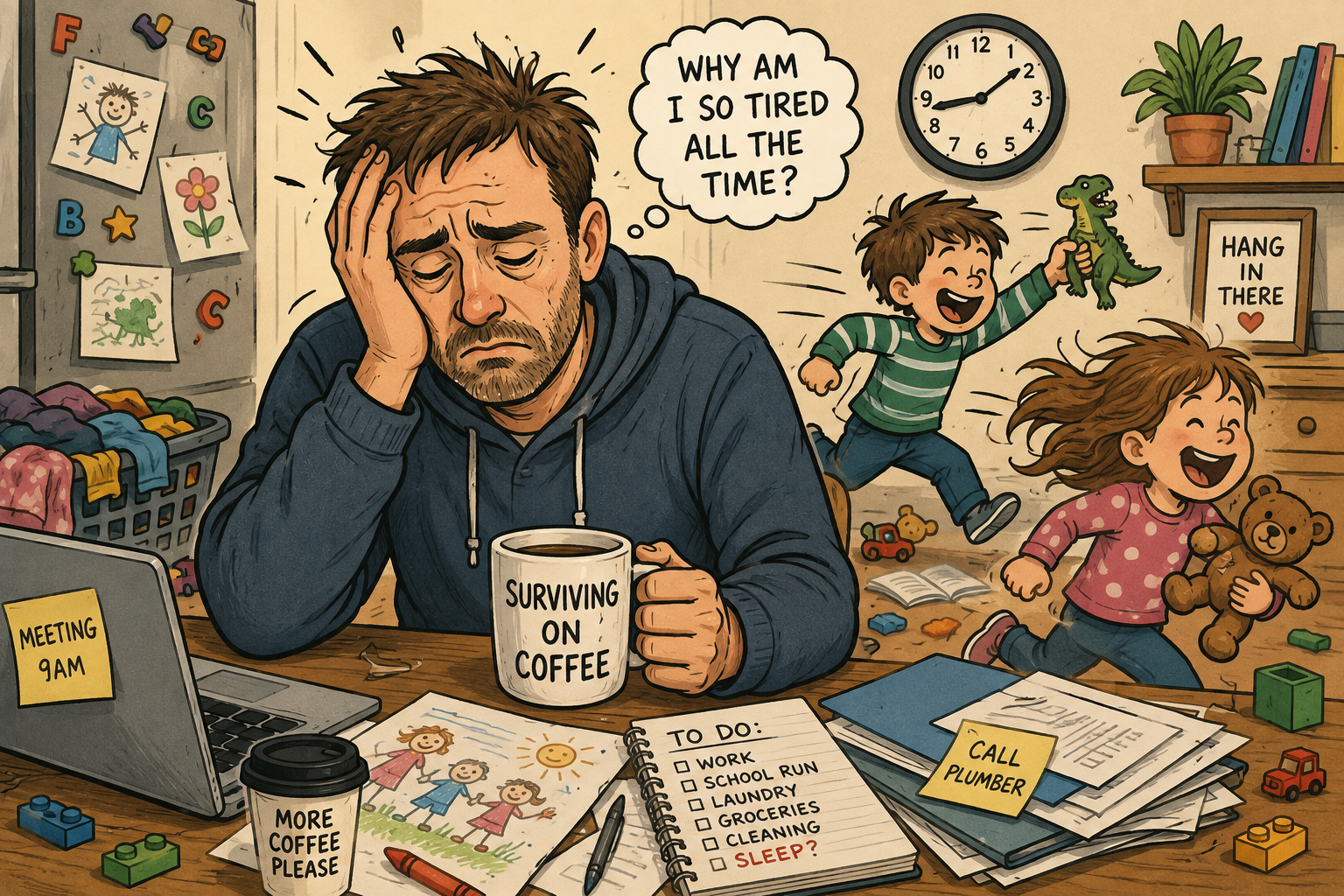
It’s a classic GP problem — and probably something I see more than almost anything else.
Sometimes there is one clear explanation. More often, tiredness reflects several smaller things all adding up. A mildly low iron level, broken sleep, a demanding job, anxiety and young children may each seem manageable on their own; together, they can leave someone completely depleted.
Could there be a physical cause?
There are many physical-health problems that can cause or worsen fatigue. Common possibilities include anaemia or iron deficiency, thyroid problems, diabetes, deficiencies in vitamin B12 or folate, kidney or liver problems, menopause and the effects of medication. Alcohol can also reduce sleep quality and energy, even when it initially seems to help with switching off.
Blood tests can be useful, but they work best when guided by the story rather than ordered as a generic panel. The timing and pattern of symptoms, changes in weight or appetite, pain, bleeding, menstrual history, infections, medication and other physical symptoms all help decide what should be checked.
Sleep is about quality as well as quantity
Eight hours in bed does not always mean eight hours of restorative sleep. Insomnia, caring for children or relatives, shift work, restless legs, pain and frequent waking can all leave someone exhausted.
Sleep apnoea is another important possibility, particularly where there is loud snoring, witnessed pauses in breathing, choking or gasping at night, morning headaches or marked daytime sleepiness. People are often unaware of it themselves until somebody else notices.
A normal set of blood tests does not mean the tiredness is imaginary. It means we need to keep looking at the whole picture.
Mental health can feel physical
Depression does not always present as obvious sadness. It may first appear as low energy, poor motivation, disturbed sleep, slowed thinking or the sense that everything requires more effort. Anxiety can be exhausting too: being constantly alert, worrying, overthinking and carrying tension uses a great deal of mental and physical energy.
This is not the same as saying that tiredness is “all in your head”. Mental and physical health are closely connected, and both deserve the same thoughtful assessment.
Sometimes life is simply asking too much
Work deadlines, parenting, caring responsibilities, financial worries, relationship difficulties, grief and a lack of genuine recovery time can gradually drain energy. People often keep going because each individual demand feels unavoidable, then wonder why they no longer feel like themselves.
These pressures can also create a vicious circle. When tired, we may exercise less, rely more on caffeine or quick food, withdraw from things that restore us, and struggle to sleep. That can make the next day harder still.
What does a useful assessment involve?
A good review should look beyond a single blood result. It may include:
- when the tiredness began and whether it is changing
- sleep quantity, sleep quality, snoring and daytime sleepiness
- mood, anxiety, concentration and enjoyment
- physical symptoms, menstrual or menopause history and recent illness
- medication, supplements, caffeine, alcohol and other substances
- work, family life, caring responsibilities and recent stresses
- a physical examination and targeted blood tests where indicated
The aim is not simply to prove that the blood tests are normal. It is to understand why you are tired and agree on changes or treatment that could realistically help.
When should you seek advice?
Speak to a clinician if tiredness has persisted for several weeks, is getting worse, is affecting daily life, or comes with other symptoms that concern you. Seek more urgent advice for symptoms such as unexplained weight loss, unusual bleeding, significant breathlessness, chest pain, new neurological symptoms or severe daytime sleepiness that makes driving unsafe.
If low mood is accompanied by thoughts of harming yourself, you feel unable to keep yourself safe, or there is immediate danger, call 999 or attend A&E. For urgent mental-health support, call NHS 111 and select the mental-health option.